

People who think seriously about dating and relationships often focus heavily on what they do not want in a partner, such as:
- Dishonesty.
- Toxic behavior.
- Emotional unavailability.
- Poor communication.
- Lack of commitment.
Understanding deal breakers is important, but healthy relationships are usually built more successfully when people become clear about what they actually want from a long-term partner.
Some people choose partners based on emotional patterns, attraction, familiarity, or early relationship experiences without even realizing it.
The truth is that lasting relationships require more than chemistry alone.
Strong relationships are built on compatibility, values, communication, emotional safety, trust, and long-term alignment.
The real question is not only who you are attracted to, but who helps create the kind of relationship you genuinely want.
Here are 15 partner qualities that can help create a happier, healthier, and more emotionally fulfilling relationship.
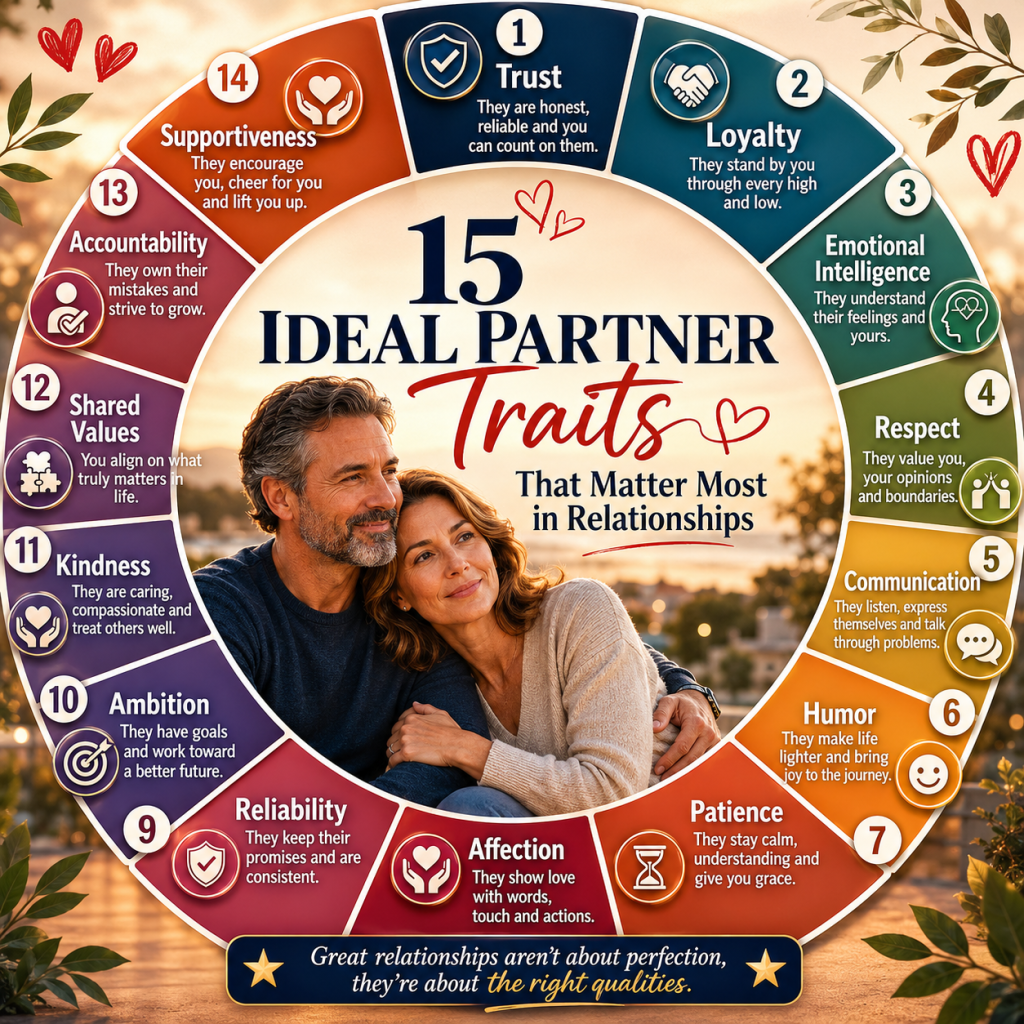
1. Emotional Availability Helps Relationships Feel Emotionally Secure
One of the most important relationship qualities is emotional availability.
Emotionally available partners usually:
- Communicate openly.
- Express emotions honestly.
- Stay emotionally present during difficult conversations.
- Offer reassurance.
- Allow vulnerability.
Without emotional availability, relationships can start feeling lonely even when two people genuinely care about each other deeply.
2. Trust Is Built Through Consistency
Trust creates emotional safety and stability in relationships.
Trustworthy partners often:
- Keep promises.
- Communicate honestly.
- Follow through consistently.
- Respect boundaries.
- Avoid manipulative behavior.
Trust is rarely built through one dramatic gesture. Most of the time, it grows through repeated consistency over time.
3. Kindness Shapes the Entire Relationship Atmosphere
Kindness affects how emotionally safe and connected a relationship feels daily.
Kind people often:
- Communicate gently.
- Show empathy.
- Offer patience.
- Treat others respectfully.
- Create emotional warmth.
Many people underestimate how important kindness becomes during stressful times, disagreements, and emotional struggles.
4. Accountability Helps Relationships Stay Healthy
Healthy relationships usually require accountability from both people.
Accountable partners often:
- Admit mistakes.
- Apologize sincerely.
- Reflect on their behavior.
- Take responsibility for growth.
- Avoid blaming others for everything.
Relationships often become emotionally exhausting when one person constantly avoids responsibility or accountability.
5. Emotional Safety Helps People Open Up Fully
People usually become more emotionally vulnerable when they feel emotionally safe in a relationship.
Emotionally safe partners often:
- Listen without humiliation.
- Avoid weaponizing insecurities.
- Respect emotional boundaries.
- Stay calm during conflict.
- Encourage honest communication.
Emotional safety often determines whether intimacy deepens or slowly disappears over time.
6. Emotional Support Strengthens Connection
Healthy relationships usually involve emotional encouragement and mutual support.
Supportive partners often:
- Encourage goals and ambitions.
- Offer comfort during difficult times.
- Celebrate achievements.
- Help reduce stress.
- Show up consistently.
Feeling emotionally supported can strengthen relationship satisfaction much more than people realize.
7. Healthy Relationships Usually Involve Growth
Strong relationships often involve two people willing to grow individually and together.
Growth-oriented partners often:
- Reflect on relationship patterns.
- Learn from mistakes.
- Stay open to self-improvement.
- Communicate about challenges.
- Adapt through life changes together.
Relationships can start feeling emotionally stagnant when neither person is willing to grow emotionally over time.
8. Communication Shapes Relationship Stability
Healthy communication is one of the strongest predictors of long-term relationship success.
Strong communicators usually:
- Listen carefully.
- Express emotions clearly.
- Ask thoughtful questions.
- Avoid passive-aggressive behavior.
- Handle disagreements respectfully.
Communication problems rarely stay small when they remain unresolved for long periods of time.
9. Loyalty Creates Emotional Security
Loyalty helps relationships feel emotionally secure and stable.
Loyal partners often:
- Protect trust.
- Stay emotionally dependable.
- Prioritize the relationship.
- Respect commitments.
- Support their partner publicly and privately.
Many times, loyalty is shown more through consistency and emotional dependability than through words alone.
10. Independence Helps Relationships Stay Balanced
Healthy relationships usually work better when both people maintain individuality.
Independent partners often:
- Have personal goals.
- Maintain friendships.
- Enjoy hobbies.
- Respect personal space.
- Avoid unhealthy emotional dependency.
Strong relationships involve emotional connection without completely losing personal identity.
11. Shared Values Often Matter More Than Chemistry Alone
Long-term compatibility often depends more on shared values than temporary chemistry or attraction.
Important shared values may include:
- Family priorities.
- Financial habits.
- Lifestyle goals.
- Communication styles.
- Spiritual beliefs.
- Relationship expectations.
Couples do not need identical personalities, but major value conflicts can create long-term emotional stress.
12. Compassion Helps Couples Through Difficult Times
Compassion often helps relationships survive stressful or painful seasons of life.
Compassionate partners usually:
- Show empathy.
- Offer understanding.
- Avoid harsh judgment.
- Care about emotional well-being.
- Stay emotionally present during painful times.
Compassion usually creates emotional closeness during vulnerability and stress.
13. Humor Helps Couples Stay Emotionally Connected
Laughter and playfulness can strengthen emotional connection significantly.
Couples who laugh together often:
- Recover from stress faster.
- Feel emotionally lighter together.
- Stay emotionally connected.
- Build positive memories together.
Humor often becomes an important emotional coping tool in healthy relationships.
14. Emotional and Physical Compatibility Both Matter
Physical attraction matters, but emotional and physical compatibility often matter even more long-term.
Healthy compatibility may involve:
- Similar affection styles.
- Shared intimacy preferences.
- Comfort discussing sexuality openly.
- Respect for boundaries.
- Emotional connection during intimacy.
Open communication about emotional and physical needs usually helps prevent misunderstandings later.
15. Authenticity Creates Emotional Trust
Authentic people are emotionally genuine and comfortable being themselves.
Authentic partners usually:
- Communicate honestly.
- Avoid pretending to be someone else.
- Stay true to their values.
- Express real emotions.
- Allow genuine vulnerability.
Authenticity helps relationships feel emotionally real instead of performative or emotionally guarded.
Knowing Your Relationship Priorities Matters
Some people enter relationships hoping chemistry alone will solve communication issues, conflict, and incompatibility.
The truth is that healthy relationships become easier when people understand:
- Their emotional needs.
- Their deal breakers.
- Their relationship values.
- Their communication style.
- Their long-term goals.
Understanding what truly matters to you in relationships can help reduce unhealthy emotional dynamics.
Relationships and Growth
One truth about healthy partnerships is that they can become spaces for emotional healing, self-discovery, and personal growth.
Strong relationships can help people:
- Develop emotional awareness.
- Improve communication.
- Understand vulnerability.
- Build trust.
- Develop empathy.
- Heal emotional wounds.
Harvard Health Publishing frequently highlights how emotional connection, supportive relationships, and communication improve emotional well-being and overall life satisfaction.
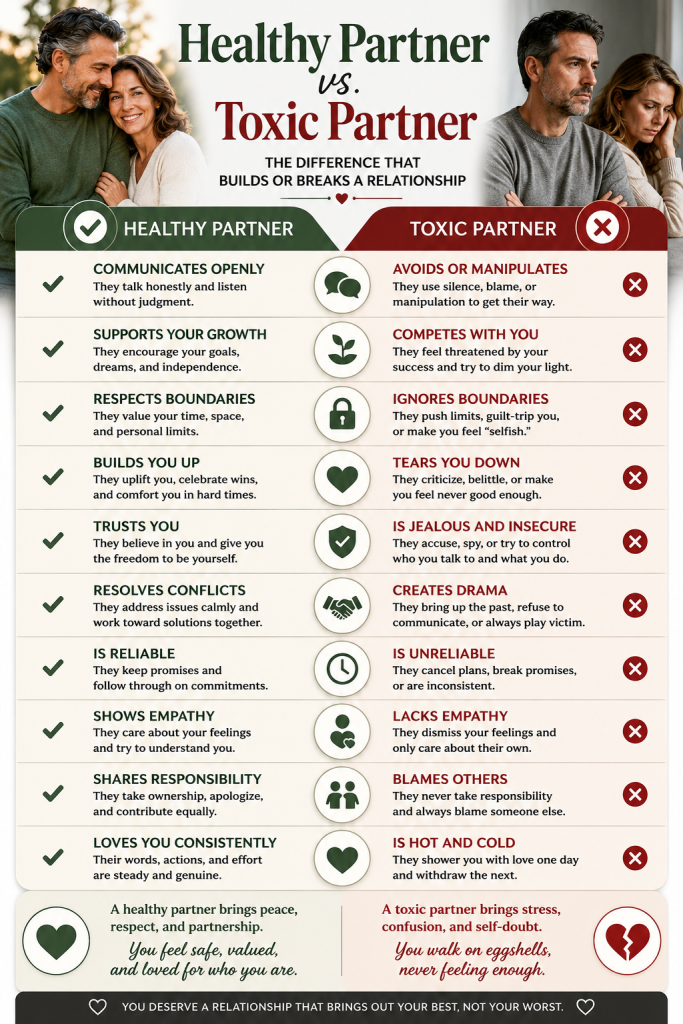
Final Thoughts: No Perfect Partners
There are no perfect partners and no perfect relationships, but certain qualities can help relationships become safer, healthier, and more fulfilling over time.
Kindness, emotional availability, trust, accountability, communication, authenticity, and emotional support often matter far more than attraction alone.
Healthy relationships are built not just on chemistry, but also through shared values, effort, emotional safety, communication, empathy, and mutual growth.
The best relationships happen when two people feel accepted, understood, and safe enough to grow together with trust and honesty.
FAQs
1. What are the most important qualities in an ideal partner?
The most important qualities include trust, respect, honesty, emotional maturity, kindness, loyalty, communication, reliability, patience, and shared values.
2. Why does trust matter so much in a relationship?
Trust helps both partners feel emotionally safe. Without trust, even small problems can turn into insecurity, doubt, and conflict.
3. Is communication more important than chemistry?
Chemistry can create attraction, but communication helps a relationship last. A strong partner knows how to listen, explain feelings, and work through problems respectfully.
4. What makes someone emotionally mature in love?
An emotionally mature partner can handle difficult conversations, take responsibility, manage stress, apologize sincerely, and avoid blaming everything on others.
5. How do shared values affect a relationship?
Shared values help couples make decisions about family, money, lifestyle, commitment, and the future with less conflict and confusion.
6. Can a relationship work if partners are very different?
Yes, differences can work when both people respect each other, communicate well, and agree on the bigger values that shape the relationship.
7. What is a green flag in a partner?
A green flag is a positive sign, such as consistency, honesty, kindness, emotional availability, respect for boundaries, and willingness to grow.
8. Why is reliability attractive in a partner?
Reliability shows that someone can be counted on. When a partner keeps promises and follows through, the relationship feels more stable.
9. How important is kindness in a long-term relationship?
Kindness is one of the most important qualities because it affects how partners speak, argue, forgive, support, and care for each other daily.
10. Should an ideal partner always agree with you?
No. A healthy partner can disagree respectfully. The goal is not constant agreement, but mutual respect and a willingness to understand each other.
11. What role does loyalty play in relationships?
Loyalty creates security. It means your partner protects the relationship, respects commitments, and does not make you feel easily replaceable.
12. How can you tell if someone respects your boundaries?
A respectful partner listens when you say no, does not pressure you, honors your time, and does not make you feel guilty for having personal limits.
13. Is humor an important partner quality?
Yes. Humor can reduce stress, create warmth, and help couples enjoy life together, as long as it is not used to mock or dismiss feelings.
14. Why is accountability important in love?
Accountability allows problems to be repaired. A partner who can admit mistakes and change behavior helps build trust over time.
15. What does emotional support look like in a relationship?
Emotional support means listening, encouraging, comforting, and showing up during both good and difficult moments.
16. Can physical attraction make up for poor character?
Physical attraction may create interest, but it cannot replace respect, honesty, emotional safety, and consistent effort.
17. What partner quality helps relationships survive conflict?
Patience, communication, and emotional maturity help couples handle conflict without turning disagreements into personal attacks.
18. How do you know if someone is a good long-term partner?
A good long-term partner is consistent, respectful, emotionally available, supportive, honest, and willing to grow with you.
19. What qualities should you avoid in a partner?
Avoid patterns like manipulation, dishonesty, disrespect, jealousy, emotional unavailability, controlling behavior, and refusal to take responsibility.
20. Can people develop better partner qualities over time?
Yes. People can grow through self-awareness, communication, therapy, life experience, and a genuine desire to become a better partner.