

Finding affirming couples therapy should let you talk about your relationship without first having to defend who you are. You may want help with a recurring argument, trust, intimacy, parenting or a major change. The starting point is the concern you want to work on together.
Gay couples are not all alike. Partners may differ in race, gender, faith, disability, income, relationship structure or how openly they share their identity. Useful care makes room for those differences and asks about your actual lives.
What affirming couples therapy should make room for
An affirming clinician respects sexual orientation and gender identity, uses the names and language each person requests, and avoids assuming what your relationship should look like. The American Association for Marriage and Family Therapy’s LGBTQIA-affirming guidelines describe inclusive and competent practice as part of clinical care.
Your goals might include a clearer division of responsibilities, a conversation about intimacy, responding to family rejection or deciding what comes next. A therapist should help you define the work and explain their approach, rather than promise that every couple will stay together.
Four areas to clarify before booking
1. Relevant experience
Ask about couples work and experience with concerns like yours. “LGBTQ-friendly” on a profile is a starting point for questions.
2. Respect for each person
Notice whether the clinician asks about identities, pronouns, culture and relationship agreements without stereotypes.
3. Practical access
Discuss fees, availability, accessibility, insurance if relevant, and whether online sessions are appropriate and available where you are.
4. Clear boundaries
Ask how privacy, records, individual contact between sessions and relationship-safety concerns are handled.
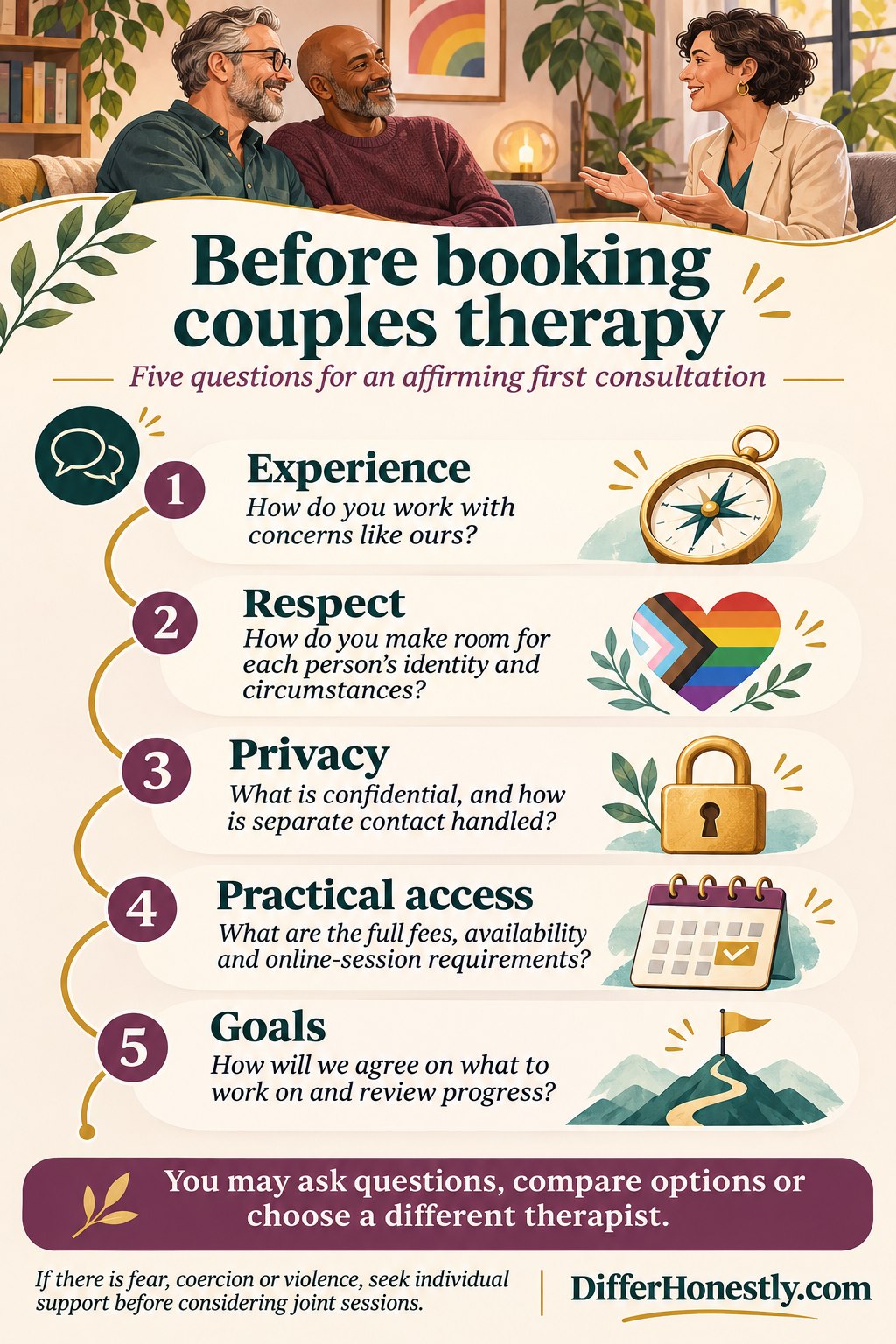
Look for experience that fits the issue
A therapist’s identity does not by itself tell you whether they are the right professional for your needs. Ask what training and experience they bring to couples work, how they understand outside pressures and how they avoid making one partner the spokesperson for a whole community.
For example, if one partner is out to family and the other is not, you may need help discussing privacy, belonging and expectations. The goal should not be to force disclosure. If parenting, a health condition or a previous betrayal is central, ask about experience with that concern too.
Check professional credentials with the appropriate licensing or registration body for your location. For telehealth, ask the clinician to explain whether they can work with you where you will physically be during sessions. Do not assume a directory listing settles every practical or professional requirement.
Agree on goals you can actually discuss
“We want to feel closer” can be a useful beginning. Make it more concrete: perhaps you want a way to revisit arguments, discuss sexual boundaries or make plans without one person feeling excluded. Each partner should have room to describe what matters.
Ask how progress will be reviewed and how the clinician responds if the work is not helping. Therapy can support exploration and change, but it cannot promise a specific outcome, erase outside discrimination or make another person participate honestly.
Our guide to partner qualities offers language for discussing everyday care. For conversations about comfort and intimacy, see a broader view of physical intimacy.

Free first-consultation question sheet
Copy the questions that matter to you into a private note. You can ask them before committing to a course of sessions.
- What experience do you have working with gay and other LGBTQ+ couples on concerns like ours?
- How would you describe your approach to couples work?
- How do you include race, faith, gender, disability or other parts of our lives when relevant?
- How do you respect different levels of openness about identity?
- Who is considered the client, and how do confidentiality and its limits work?
- How do you handle separate messages, individual meetings and information one partner shares privately?
- How do you screen for coercion, abuse or fear of retaliation?
- What are the full fees, cancellation rules and expected scheduling options?
- What should we know about online sessions, records and a private space?
- How will we agree on goals, review progress and discuss a change of approach?
Opening example: “We are looking for support with recurring conflict and different levels of openness with family. Before booking, could you explain your experience with those concerns and your confidentiality policy?”
Talk about privacy in detail
Ask who can access records, what information appears in appointment reminders or billing, and how insurance communications may work if you use coverage. If disclosure of your relationship or identity could create a problem, raise that concern before sharing more than you want to.
For an online consultation, consider whether each person can speak freely in the available space. A shared room, monitored device or partner listening outside an individual appointment may affect what is safe to discuss. Tell the clinician about practical concerns through a safer contact route when needed.
Faith and spiritual practices can be part of the conversation
If spirituality matters to you, you can ask how the therapist makes room for it while affirming your identity. A spiritual practice may be a source of comfort or community; it should not be imposed as a cure or a condition for acceptance.
The American Psychological Association’s guidance on affirmative responses supports acceptance and exploration without imposing a particular sexual-orientation outcome. Seek care that lets you speak honestly about both identity and belief.
Choose the next step without pressure
After a consultation, consider whether both people were heard, questions were answered clearly and the practical arrangements fit. You can ask for clarification, take time or choose another clinician. A useful starting decision is simply whether this professional seems appropriate for a first session.
Frequently asked questions
1. What is gay couples therapy?
It is couples counseling that can address relationship concerns while recognizing the lives and experiences of gay partners. The approach should be affirming, individualized and suited to the goals of the people attending.
2. Do both partners have to identify as gay?
No. Couples may use different identity labels or none at all. Tell the clinician which words each person prefers and ask whether their experience fits your relationship.
3. Does the therapist need to be LGBTQ+?
A shared identity can matter to your comfort, but it does not by itself establish competence or fit. Ask about relevant training, couples-work experience and how the clinician practices affirmatively.
4. Can we attend before we are in a crisis?
Yes. You can ask for help with communication, planning or an ongoing difference. The clinician can discuss whether their services suit what you want to work on.
5. Can therapy help with different coming-out timelines?
A therapist can help you discuss needs, privacy and expectations. Disclosure should not be forced, and safety or practical consequences may need individual attention.
6. What should we ask about confidentiality?
Ask who is considered the client, the limits of confidentiality, access to records and policies for separate messages or individual meetings. Do not assume every clinician uses the same rules.
7. How do we check credentials?
Use the relevant licensing or registration body for the professional and location, and ask the clinician to explain their qualification and scope. A website label alone is not verification.
8. Can we do couples therapy online?
Ask about availability, professional requirements where you will be located, platform privacy and whether each person can speak freely. Online sessions are not the best arrangement for every situation.
9. Can we discuss sex and relationship agreements?
You can ask whether the clinician has appropriate experience and how they discuss consent, intimacy and your actual agreements without assumptions.
10. What if we have different goals?
Tell the clinician early. They can explain how they work with different priorities and whether a joint approach is appropriate. Therapy cannot require one person to choose the other's preferred outcome.
11. Does therapy guarantee we will stay together?
No. It may help you understand concerns and options, but no professional should promise a particular relationship outcome.
12. What if one partner does not want to attend?
You can seek individual support for your own needs. Avoid using attendance as proof of love or assuming you can complete couples work on the other person's behalf.
13. Is couples therapy appropriate when there is abuse?
Joint sessions may create risks when there is coercion, violence or fear of retaliation. Seek confidential individual guidance from a qualified professional or domestic-abuse advocate.
14. How do we compare costs?
Ask about session fees and length, cancellation rules, insurance if relevant, any separate charges and scheduling expectations. Use the actual written terms rather than assuming a standard price.
15. What if the first consultation feels wrong?
You can ask questions, decline further sessions or look elsewhere. A respectful clinician should explain their approach and allow you to make an informed choice.