

Shame can make a mistake, rejection, or vulnerable moment feel like evidence that something is wrong with who you are. That is one reason people hide: they are not only trying to avoid embarrassment, they are trying to avoid the feared experience of being seen and rejected. Reducing shame is not about pretending nothing matters. It is about separating your identity from a painful feeling so you can respond with accountability, boundaries, and self-respect.
Shame and Guilt Are Not the Same
Guilt usually focuses on behavior: “I did something I regret.” Shame is broader: “I am bad,” “I am defective,” or “If people knew the real me, they would leave.” Guilt can motivate repair. Shame often makes repair harder because hiding, defensiveness, or self-attack takes over.
What Shame Can Feel Like
Shame can show up as wanting to disappear, avoiding eye contact, feeling exposed, becoming defensive, overexplaining, people-pleasing, perfectionism, emotional numbness, or withdrawing from relationships. People experience it differently, and not every one of these reactions means shame is the cause.
How Shame Becomes Internalized
Repeated criticism, humiliation, bullying, rejection, neglect, abusive experiences, or environments where vulnerability was punished can teach a person to expect judgment. Over time, an old message can begin to sound like an objective fact even when it is not.
Shame Often Hides Behind Other Behaviors
Perfectionism can be an attempt to avoid criticism. People-pleasing can be an attempt to prevent rejection. Anger can protect against feeling exposed. Overachievement can become a way of proving worth. Understanding the function of a behavior is more useful than simply labeling it bad.
Why Hiding Can Feel Safer
If you believe acceptance depends on hiding parts of yourself, secrecy can feel protective. The problem is that it also prevents you from discovering which relationships are actually safe enough for honesty. Healthy healthy partner qualities include respect, accountability, emotional safety, and boundaries rather than humiliation.
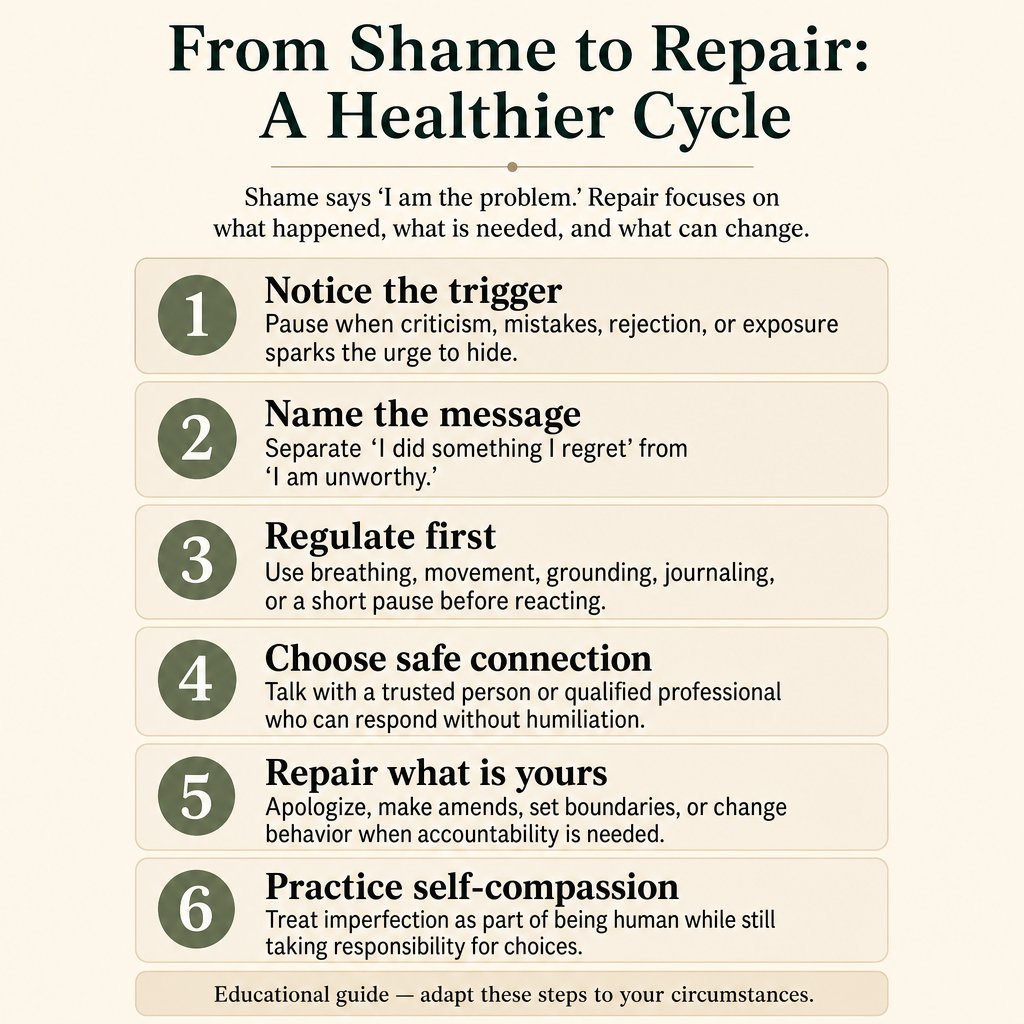
1. Notice the Trigger Before the Story Takes Over
Start by identifying what happened: criticism, a mistake, rejection, comparison, conflict, or feeling exposed. Then notice the automatic message. Naming the trigger creates a small gap between the event and the conclusion you draw about yourself.
2. Change the Sentence
Replace identity statements with specific statements. “I am a failure” becomes “I am disappointed with how I handled that.” “Nobody could accept me” becomes “I am afraid of being rejected.” Specific language makes room for action.
3. Regulate Before You React
Slow breathing, walking, stretching, grounding through your senses, journaling, or taking a short pause can reduce the intensity enough to choose your response. These techniques are not a cure for shame; they are tools for getting through the peak of an emotional reaction.
4. Choose Safe People Carefully
Vulnerability is not the same as telling everything to everyone. Start with someone who has shown that they can listen without mocking, exploiting, or weaponizing what you share. Trust should be earned through consistent behavior.
5. Repair What Actually Needs Repair
Self-compassion does not cancel accountability. If you harmed someone, apologize clearly, make reasonable amends, and change the behavior you can change. Repair focuses on what you did and what you will do next rather than using self-punishment as proof that you care.
6. Strengthen Boundaries
Shame can make people tolerate criticism, pressure, or disrespect because they believe they deserve it. Rebuilding personal boundaries means deciding what treatment is acceptable and acting when those limits are crossed.
7. Practice Self-Compassion Without Excusing Everything
Talk to yourself with the same combination of honesty and humanity you would use with someone you respect. You can acknowledge a mistake, feel regret, and still reject the idea that one event defines your entire worth.
8. Consider Professional Support
A qualified mental-health professional can be useful when shame is connected to trauma, abuse, depression, anxiety, eating problems, addiction, self-harm, or persistent isolation. Therapy can provide a structured place to examine beliefs and coping patterns without requiring you to manage everything alone.
A Note on Safety
If shame is accompanied by thoughts of self-harm or suicide, seek immediate support from local emergency services or a crisis service available in your country. Online self-help content is not a substitute for urgent professional care.
Final Thoughts
Shame gets stronger when every painful moment is turned into a verdict about identity. A healthier cycle is more specific: notice what happened, regulate, decide what is yours to repair, protect your boundaries, and let safe relationships challenge the belief that imperfection makes you unworthy of connection.
Frequently Asked Questions
1. What is shame?
Shame is a painful self-conscious emotion that can make a person feel fundamentally flawed, exposed, or unworthy.
2. How is shame different from guilt?
Guilt usually focuses on a behavior you regret, while shame often turns the experience into a negative judgment about your whole identity.
3. What is toxic shame?
The term is commonly used for persistent, identity-level shame that spreads across many areas of life and can be difficult to challenge without support.
4. Why does shame make people hide?
Hiding can feel like protection when a person expects that being fully seen will lead to judgment, humiliation, or rejection.
5. Can perfectionism be connected to shame?
Sometimes. Perfectionism can become a strategy for trying to avoid criticism, failure, or feeling exposed.
6. Can people-pleasing be connected to shame?
Yes, in some cases people-pleasing is used to reduce the perceived risk of rejection or conflict.
7. How do I stop saying ‘I am a failure’?
Try replacing global identity statements with specific descriptions of what happened and what you can do next.
8. Does self-compassion mean avoiding accountability?
No. Self-compassion can coexist with apology, repair, changed behavior, and clear responsibility.
9. How can I calm down when shame feels intense?
Slow breathing, grounding, movement, journaling, or taking a short pause can help reduce the intensity enough to respond more deliberately.
10. Should I tell people what I am ashamed of?
Only when it feels appropriate and safe. Vulnerability should be selective, and trust should be based on consistent respectful behavior.
11. How do I know someone is emotionally safe?
Look for respect, confidentiality, empathy, consistency, boundaries, and an absence of humiliation or coercion.
12. Can shame affect relationships?
Yes. Shame can contribute to withdrawal, defensiveness, secrecy, people-pleasing, difficulty receiving care, and fear of vulnerability.
13. Can shame affect self-worth?
Persistent shame can become closely tied to negative beliefs about worth, competence, appearance, lovability, or belonging.
14. How can boundaries help with shame?
Boundaries reinforce that feeling ashamed does not mean you must accept disrespect, pressure, humiliation, or mistreatment.
15. Can therapy help with shame?
Yes. Therapy can help examine learned beliefs, process painful experiences, strengthen coping skills, and separate identity from shame-based conclusions.
16. What if shame is related to childhood experiences?
A qualified therapist can help you explore how early criticism, neglect, humiliation, bullying, or other experiences may still influence current beliefs.
17. Can journaling help with shame?
Journaling can help identify triggers, automatic thoughts, evidence, needs, boundaries, and possible repair steps.
18. What should I do after I make a real mistake?
Acknowledge the behavior, apologize when appropriate, make reasonable amends, learn from it, and focus on changed behavior rather than endless self-punishment.
19. When is shame a mental-health concern?
Consider professional support when shame is persistent, severe, linked to trauma, or interfering with relationships, daily functioning, eating, substance use, or safety.
20. What should I do if shame leads to self-harm thoughts?
Seek immediate support from local emergency services or a crisis service in your country. Urgent safety needs should not be handled with self-help content alone.