

A sunrise ritual can create a calm transition into the day, but it is not a requirement for success. “High performer” should not mean sleeping less, ignoring health, or turning every quiet moment into productivity. A useful morning practice is flexible, evidence-aware, and compatible with your work schedule, caregiving duties, culture, health, and natural sleep needs.
Spiritual tools such as prayer, tarot, crystals, sound, or affirmations can be used as symbols and reflection prompts. They do not guarantee intuition, energy alignment, career success, or better decisions. The practical value comes from the attention, meaning, and behavior you bring to the ritual.
Why Morning Routines Can Feel Grounding
Repeating a small sequence can reduce the number of choices you face immediately after waking. Morning light also gives the body a time cue, while a regular sleep schedule supports sleep health. The CDC notes that most adults need at least seven hours of sleep and recommends keeping a regular schedule. Waking for sunrise is not beneficial if it repeatedly shortens the sleep you need.
Mindfulness may help some people manage stress, but results vary. The National Center for Complementary and Integrative Health says research is sometimes preliminary or interpreted too optimistically, and meditation should not replace conventional care. That is a sound standard for any spiritual morning routine.
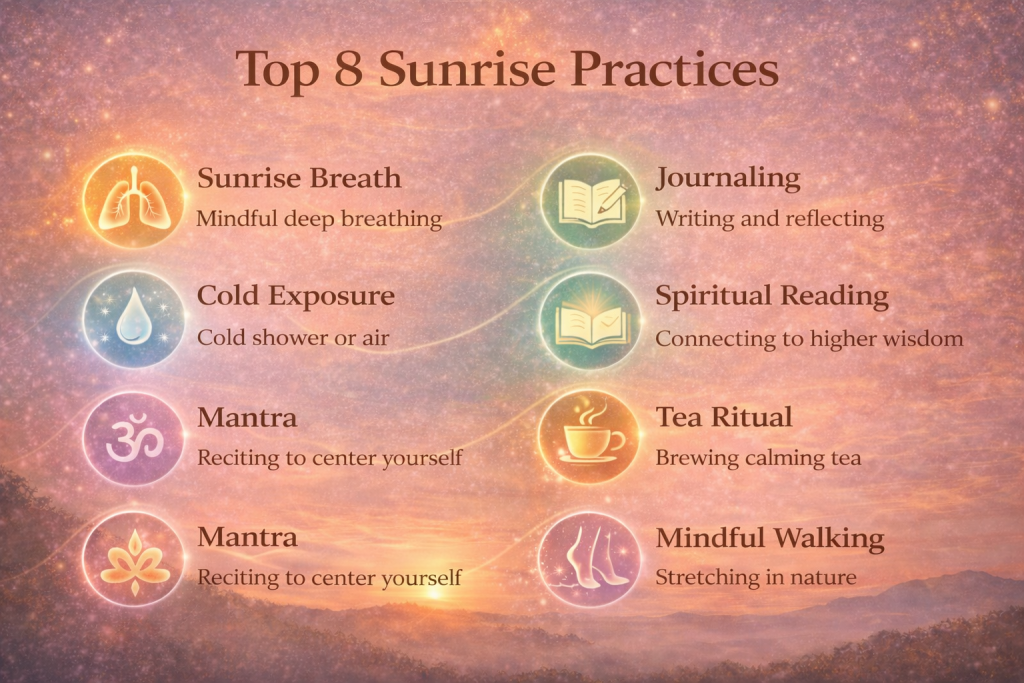
Eight Sunrise Practices to Try
1. Protect Sleep First
Choose a wake time that allows adequate sleep. Shift gradually if you want to wake earlier, and return to a later routine when work, illness, parenting, or seasonal darkness makes sunrise impractical. Consistency can help, but rigid rules can create stress.
2. Notice Natural Light Safely
Open the curtains, sit near a window, or step outside if the location and weather are safe. Do not stare at the sun, even at sunrise, and never use direct sunlight through a crystal or lens because it can concentrate light and cause eye injury or fire. Let the changing sky be a cue to pause rather than a supernatural message.
3. Use Comfortable Breathing
For two to five minutes, breathe at an easy pace without forcing deep inhalations or long breath holds. Stop if you become dizzy, numb, panicked, or short of breath. People with heart, lung, pregnancy, fainting, or panic concerns should ask a qualified clinician about suitable practices. Relaxation techniques can complement care but should not postpone medical attention.
4. Meditate Briefly
Place attention on breathing, sound, or physical contact with the chair. When the mind wanders, return gently. Start with two minutes rather than treating a long session as proof of discipline. If meditation intensifies anxiety, dissociation, or distress, stop and choose a more external grounding activity. This guide to mindfulness in an ordinary day offers a similarly flexible approach.
5. Journal with an Actionable Intention
Write one priority, one possible obstacle, and one next action. “I will answer the difficult email by 10 a.m.” is more useful than demanding perfect clarity from the universe. If you like spiritual language, add a value such as patience, honesty, courage, or compassion.
6. Use Crystals as Symbols
You might associate smoky quartz with steadiness, amethyst with reflection, or citrine with optimism. These meanings are spiritual and cultural associations, not proven medical effects or measurable energy changes. A stone can function as a visual reminder: touch it, name your intention, and then take the practical step connected to that intention.
7. Explore Sound Without Health Claims
Chimes, singing bowls, music, mantra, or quiet can mark the beginning of a routine. Sound does not literally clear negative energy, balance hormones, or guarantee lower tension. Keep the volume comfortable, respect sleeping household members and neighbors, and avoid presenting culturally specific instruments or chants as generic wellness props without learning their context.
8. Try Tarot or Oracle Cards as Reflection
Pulling one card can offer a theme or question, but it cannot reveal what will happen that day. Ask, “What perspective could I consider?” or “What value do I want to practice?” Then evaluate choices using facts, professional advice, and the needs of everyone affected. For more on reality checks, read Increasing Your Intuition and Understanding Your Psychic Gifts.
A Flexible Morning Sequence
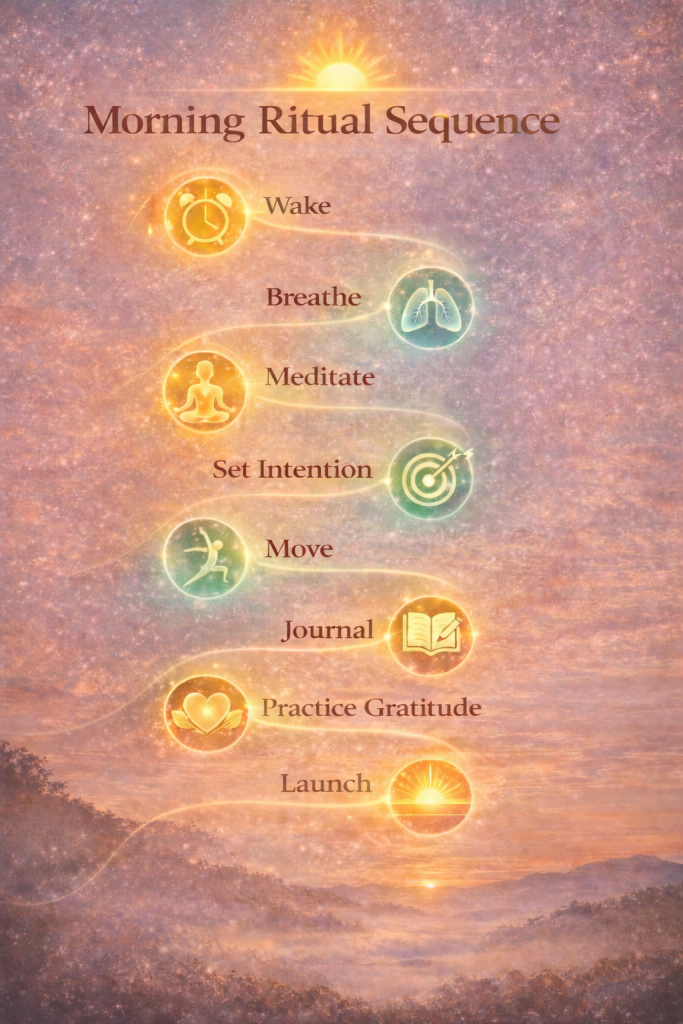
A practical 15-minute version might look like this:
- Drink water and notice how rested you feel.
- Spend two minutes near natural light without looking at the sun.
- Take five minutes for comfortable breathing or quiet meditation.
- Write one priority, one boundary, and one act of care.
- Choose a symbolic object, card, phrase, or piece of music.
- Begin the first concrete task.
On a difficult morning, shorten the sequence to one minute. On days off, expand it if that feels restorative. The routine serves you; you do not serve the routine.
Gratitude and Affirmations Without Pressure
Gratitude can be specific and honest: a warm drink, a person who helped, or one safe place to rest. It does not require denying grief, anger, injustice, or uncertainty. Avoid using gratitude to silence someone else’s pain.
Choose believable affirmations that point toward action: “I can pause before responding,” “I can ask for help,” or “I will take one useful step.” Statements that promise perfect confidence or universal support may backfire when they do not feel credible.
Decision-Making Boundaries
Do not let a card, psychic reading, crystal, dream, or perceived sign make high-stakes decisions for you. Medical symptoms belong with qualified health professionals; legal and financial questions need appropriate experts; workplace decisions should consider evidence, ethics, and consequences. Spiritual reflection can sit beside those processes, not replace them.
Energy scanning can be reframed as a body check: notice tension, hunger, fatigue, or emotion without diagnosing “blockages.” If a sensation is new, severe, or persistent, seek medical advice. If spiritual practices cause fear, sleeplessness, compulsive checking, or loss of functioning, pause and speak with a mental health professional.
Measure What Actually Helps
Try a routine for two weeks and record sleep duration, mood, focus, and whether the chosen priority was completed. Compare it with a simpler routine. This turns “I feel more aligned” into information you can use while still honoring the spiritual meaning. You may discover that the most effective tools are adequate sleep, fewer phone notifications, a realistic plan, and a moment of quiet.
For a broader spiritual perspective without pressure to perform, see Be Free in Your Spiritual Life.
Frequently Asked Questions
Do I need to wake at sunrise to be successful?
No. Adequate sleep and a sustainable schedule matter more than copying an early routine. Shift workers and people with different chronotypes can create a ritual after their own waking time.
Can crystals or sound clear negative energy?
That is a spiritual belief, not an established medical effect. Use crystals or sound as optional symbols or sensory cues, not as treatment.
Can tarot guide business or health decisions?
Tarot can prompt reflection, but high-stakes choices should rely on evidence and qualified professional advice. A card cannot predict outcomes or diagnose a condition.
What if meditation makes me feel worse?
Stop, orient to the room, and choose an external grounding activity. Seek professional support if distress persists or interferes with daily life.