
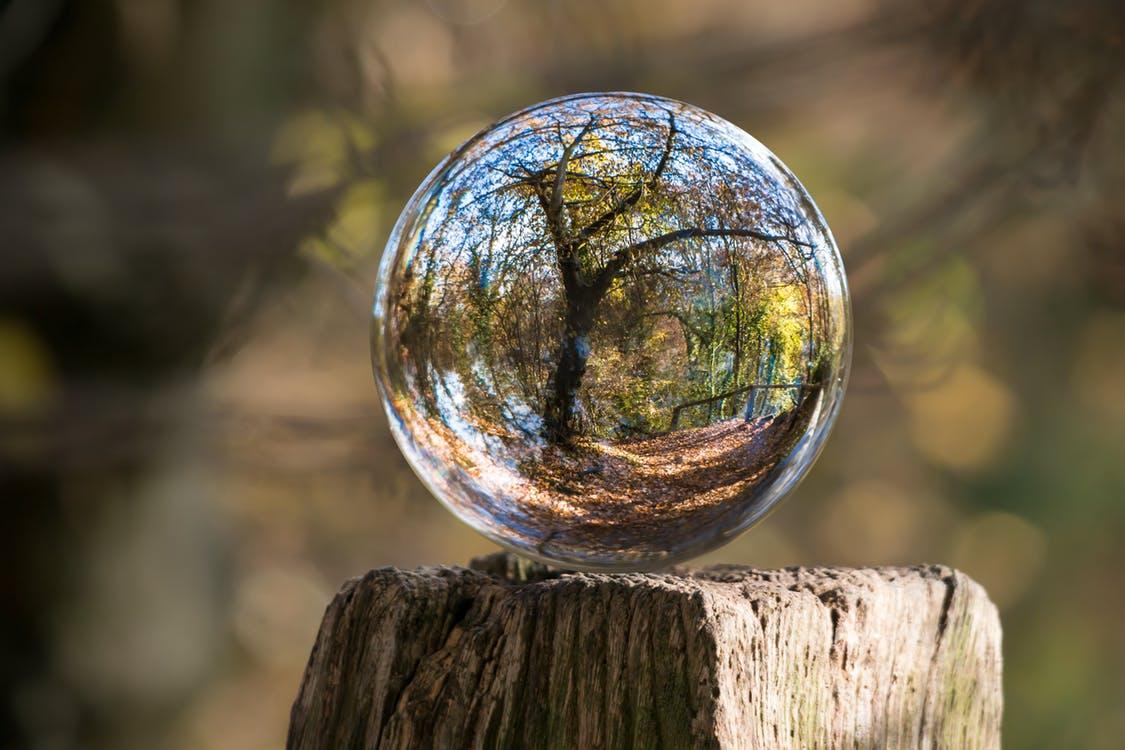
Clairvoyance means “clear seeing” in spiritual vocabulary: receiving impressions as inner images, symbols, colors, scenes, or dreams. Some people use the term for meaningful intuition; others understand the same experiences as imagination, memory, pattern recognition, or ordinary visual effects. There is no objective self-test that can prove a person has a paranormal ability.
That does not make every inner image unimportant. Imagery can support creativity, reflection, planning, and emotional insight. The safest approach is to describe what happened, consider several explanations, and avoid turning an impression into a fact about another person or the future.
Experiences sometimes described as clairvoyant
- Spontaneous mental pictures, symbols, colors, numbers, or short scenes.
- Vivid dreams or unusually strong visual memory.
- Easy visualization of rooms, routes, objects, or projects.
- A strong interest in art, photography, design, maps, or spatial puzzles.
- An image that appears while reflecting on a person or decision.
- A personal symbol that repeatedly comes to mind in similar situations.
None of these experiences proves clairvoyance. They are also common features of imagination, dreaming, attention, memory, and visual-spatial thinking. A person can enjoy them without adopting a psychic identity, and someone who cannot form voluntary mental images can still be intuitive, empathic, and creative.
Inner imagery is different from a change in eyesight
An inner image is experienced in the “mind’s eye.” Flashes, new floaters, shadows, halos, blurred vision, or a curtain-like area in the actual visual field can have eye or neurological causes. Do not assume they are spirits, auras, guides, or an opening third eye.
The National Eye Institute’s information on floaters explains that a sudden increase in floaters, flashes of light, or a curtain or shadow over vision can signal a retinal tear or detachment and needs prompt assessment. Sudden vision loss, severe eye pain, or visual symptoms with weakness, confusion, or a severe headache require urgent medical attention.
A grounded clairvoyance reflection exercise
- Set a limited purpose. Choose a low-stakes question such as “What quality would help me approach today?” Do not use the exercise to diagnose illness, locate a missing person, accuse someone, or make legal or financial decisions.
- Orient to the present. Notice the room, time, and contact with the chair or floor. Keep your eyes open if closing them feels uncomfortable.
- Invite an image without forcing it. Let a color, object, place, or no image arise. Natural breathing is enough.
- Record the observation. Write exactly what appeared before interpreting it: “blue door,” not “a blue door means my guide promises success.”
- List possible sources. Consider recent media, memories, hopes, fears, coincidence, visual aftereffects, and spiritual meaning.
- Choose a proportionate action. Use the image as a journaling prompt or creative idea. Verify real-world claims with evidence and qualified advice.
- Close the exercise. Look around, move, and return to an ordinary task.
The clairvoyant meditation guide offers a longer version with the same uncertainty and safety limits. If your interest is in colors or outlines around people, read how to see energy for an explanation of contrast, afterimages, consent, and non-diagnostic symbolism.
How to test an impression without fooling yourself
Write the impression down before the outcome, include the date and exact wording, and record misses as carefully as matches. Avoid broad predictions that could fit almost anything. Do not repeatedly reinterpret a failed prediction until it appears correct. Even an accurate match can occur by chance or because you noticed ordinary cues.
For decisions, ask: What evidence would change my mind? What is the cost if the impression is wrong? Who else is affected? What professional information is needed? Spiritual reflection should never override consent, prescribed care, emergency help, or another person’s right to make their own choices.
When to seek support
Inner imagery during imagination or meditation is different from persistent visions that seem externally present. The NHS guidance on hallucinations and hearing voices describes a range of possible causes and when urgent help is needed.
Seek professional assessment if images, figures, or voices are new, distressing, persistent, affect sleep or daily functioning, involve commands, or occur with confusion, fever, substance use, or medication changes. Contact local emergency services if there is immediate danger, rapidly worsening confusion, or a risk of harm. Getting help does not require giving up a spiritual worldview.
Choosing a responsible psychic practitioner
Be cautious if someone guarantees that you are clairvoyant, claims only they can unlock your gift, predicts disaster, says you are cursed, demands escalating payments, asks you to hide the sessions, or discourages medical and mental-health care. A responsible practitioner respects uncertainty, consent, privacy, budgets, and your freedom to stop.
Frequently asked questions
Is vivid imagination proof that I am clairvoyant?
No. Vivid imagery is common and can support creativity and planning. It may have personal spiritual meaning, but it does not prove paranormal ability.
Do flashes or floaters mean my third eye is opening?
No. Flashes and floaters can have physical causes. Sudden new symptoms, a shadow or curtain, pain, or vision loss need prompt medical assessment.
How can I practise clairvoyant imagery safely?
Use low-stakes prompts, stay oriented, record impressions before interpreting them, consider ordinary explanations, and never replace evidence, consent, or professional care.
What if an image or voice feels frightening or commanding?
Stop the practice, orient to your surroundings, contact a trusted person, and seek professional help. Use emergency services if there is immediate danger or risk of harm.