
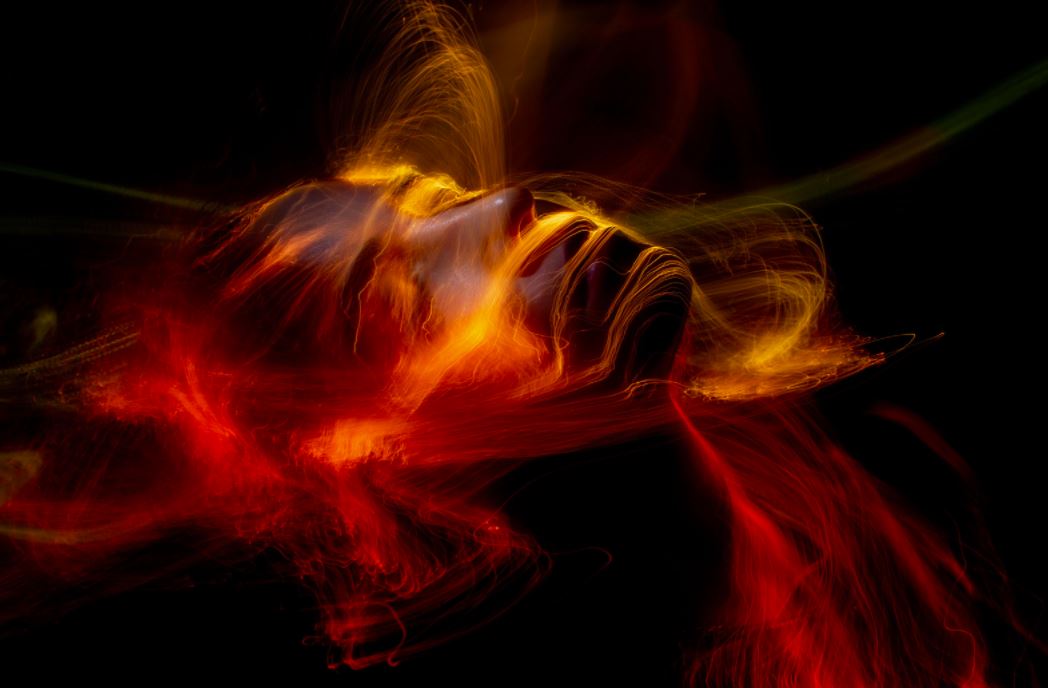
Aura colors are part of spiritual and symbolic traditions, not a scientifically validated way to measure energy, diagnose health, or read someone’s personality. A color may be used as a reflection prompt, much like a journal image or tarot symbol. Its meaning is not fixed, and the person having the experience remains the best source on their own feelings.
Lighting, background contrast, camera settings, afterimages, expectation, and imagination can all affect perceived colors. Rubbing your hands together creates warmth, friction, pressure, and heightened attention; those sensations do not establish an invisible energy field.
A symbolic aura-color guide
The interpretations below are optional prompts rather than facts. Ask what the color means to you, what observable experience brought it to mind, and whether another explanation fits.
Red: action and physical needs
Red is often associated with vitality, urgency, passion, anger, or grounding. It does not prove that a root chakra is strong or that someone has extra energy. A useful prompt is: What needs attention in my body, safety, or daily routine?
Orange: creativity and pleasure
Orange may symbolize play, sexuality, novelty, or creative expression. It cannot confirm sexual health or a “balanced” sacral chakra. Ask whether pleasure, consent, rest, or creative time needs more room.
Yellow: confidence and direction
Yellow is sometimes linked with optimism, visibility, learning, or personal agency. It does not guarantee happiness, popularity, or power. Consider one decision where clearer information or a manageable next step would help.
Green: care and growth
Green may evoke nature, compassion, grief, renewal, or relationships. It cannot measure forgiveness or prove the condition of a heart chakra. Ask where care is reciprocal and where a boundary is needed.
Pink: tenderness and connection
Pink is often used for affection, softness, romance, or self-kindness. It does not show that a person is available for love. Attraction and relationships require direct communication and consent.
Blue: expression and calm
Blue may represent communication, reflection, sadness, or spaciousness. It cannot establish mental strength or communication ability. Ask what you want to say, what you need to hear, and which conversation is safe to have.
Purple: imagination and meaning
Purple is commonly connected with spirituality, intuition, mystery, or creativity. It does not prove clairvoyance, an open third eye, or psychic gifts. Record impressions and compare them with evidence before using them in decisions.
White: clarity and simplicity
White may symbolize beginnings, peace, integration, or perfectionism. It does not reveal purity, spiritual rank, anxiety, or contact with a higher self. No color makes one person more worthy than another.
Black or dark colors: rest and the unknown
Black may symbolize protection, privacy, fatigue, grief, fear, or the unknown. It is not inherently negative and does not diagnose illness or a need for energy healing. Persistent fatigue or other symptoms deserve ordinary assessment and qualified care.
Rainbow: complexity
Multiple colors can represent variety, competing needs, transition, or simply an artistic effect. A rainbow image does not prove rare powers, confidence, sociability, or overwhelm.
How to use a color reflection safely
- Name the color and the setting in which you noticed or imagined it.
- Describe the observable facts before interpreting them.
- Write two or more possible meanings, including ordinary explanations.
- Choose one low-risk question about your own values or behavior.
- Do not assign a diagnosis, motive, destiny, or moral quality to another person.
- Check important choices with evidence and appropriate expertise.
For a broader explanation of aura language as metaphor, see What Does Your Aura Look Like?. For limits on healing claims, read Energy Healing: Beliefs, Evidence and Limits.
Aura photography and readings
An aura portrait can be enjoyed as artwork or entertainment. Ask what the camera measures, how colors are generated, whether the interpretation is standardized, what personal data is retained, and what the full price includes. Do not let a photo or reading direct medical treatment, spending, legal action, relationship accusations, or safety decisions.
Leave if a reader says a dark color proves a curse, danger, disease, betrayal, or spiritual defect—and especially if the proposed solution requires urgent or repeated payment.
When support matters
Changes in color perception, vision, mood, sleep, energy, or functioning may have ordinary or medical explanations. Sudden or concerning visual changes deserve prompt healthcare, and persistent distress deserves qualified support. The National Institute of Mental Health offers general self-care guidance and signs for seeking professional help.
Frequently Asked Questions
Do aura colors have universal meanings?
No. Meanings vary across readers, traditions, cultures, and individuals. Treat them as optional symbols rather than objective facts.
Can an aura color diagnose my health?
No. A color, sensation, or aura photograph is not a medical or mental-health assessment and should not guide treatment.
Does a dark aura mean something bad?
No. Dark colors are not proof of illness, danger, curses, bad character, or spiritual weakness.
Why might I see colors around someone?
Lighting, contrast, afterimages, visual processing, expectation, and imagination are possible explanations. Seek healthcare for sudden, persistent, or concerning vision changes.