

Marriage does not have one universal purpose. For some couples it is a legal and financial partnership; for others it expresses love, family, faith, cultural tradition, caregiving, or a public commitment. Some people choose long-term partnership without marriage, and others choose not to partner at all.
The useful question is not “What is marriage supposed to be?” but “What are we agreeing to, and does that agreement respect both people?”
Why people get married
Partners may value companionship, shared parenting, mutual care, sexual or romantic connection, community recognition, immigration status, inheritance, health decisions, taxes, insurance, or religious meaning. The legal effects vary by location and personal circumstances, so a lawyer or qualified financial professional is the right source for individual advice.
Unspoken expectations create avoidable confusion. Before marrying—and throughout a marriage—talk about money, household work, children, sex, monogamy or other agreements, religion, careers, extended family, caregiving, privacy, and where to live. Agreement today does not eliminate the need to revisit these topics later.
Happiness, growth, and ordinary life
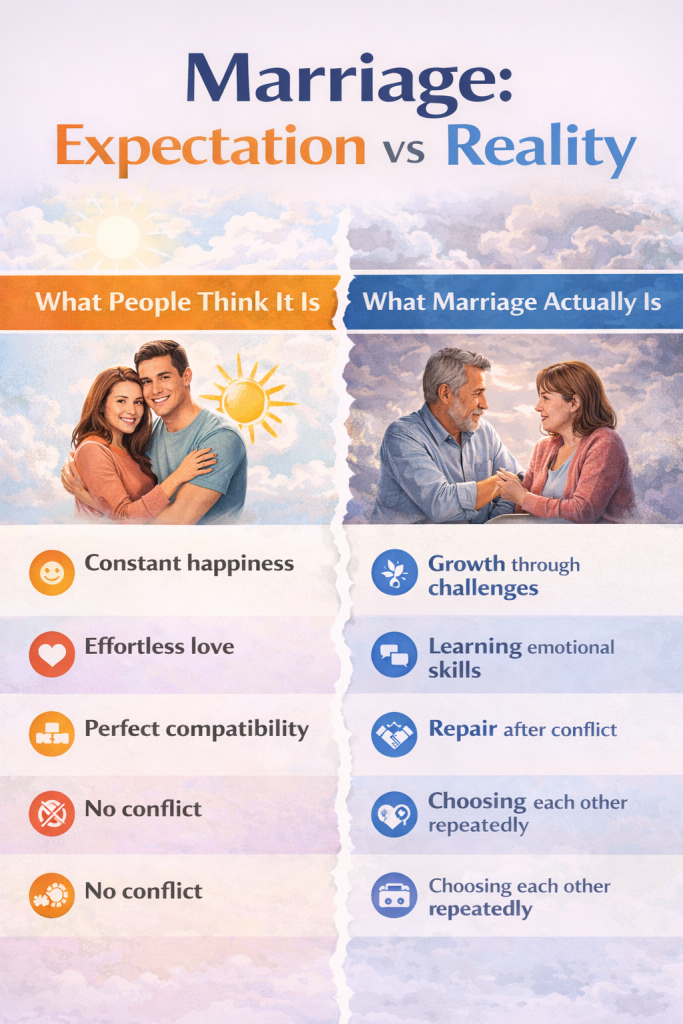
A spouse cannot guarantee constant happiness. Moods, health, work, grief, finances, and many other conditions affect wellbeing. Still, this does not mean a partner’s behavior is irrelevant or that unhappiness should simply be endured.
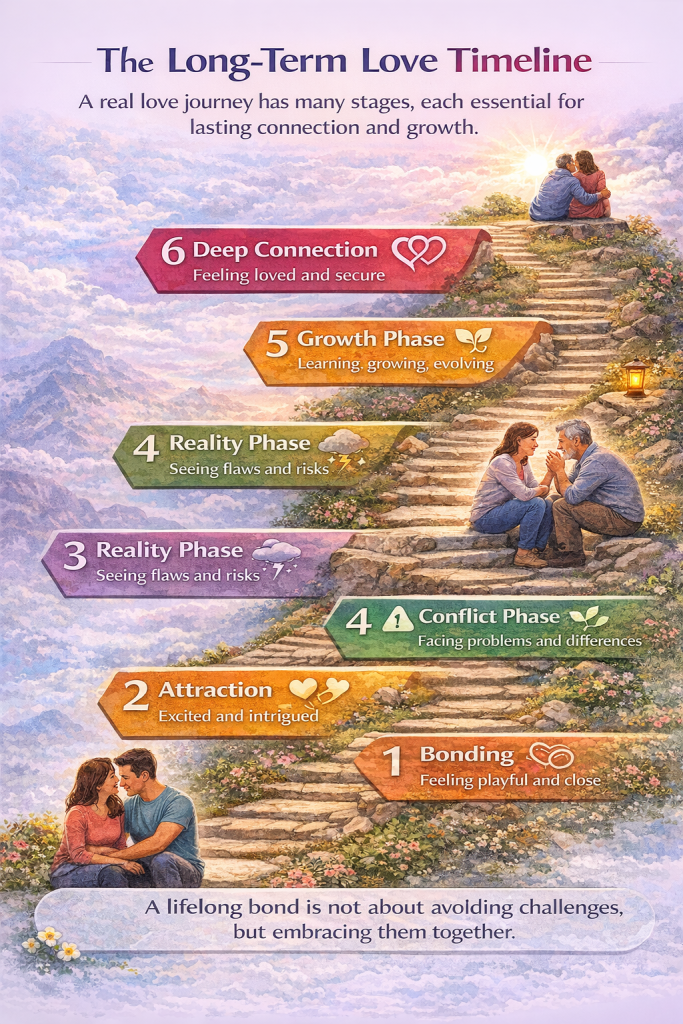
Growth can be part of marriage, but it is not the only point and should never become a reason to tolerate cruelty. A partner may invite reflection; they do not own your development. Healthy growth is chosen, reciprocal, and compatible with safety, dignity, and autonomy.
What healthy conflict looks like
Disagreement can occur in respectful relationships. Constructive conflict focuses on the issue, allows both people to speak, avoids threats and humiliation, and permits a pause when emotions run high. A basic process is:
- Name one specific issue rather than attacking character.
- Describe the effect and the need in plain language.
- Listen for understanding before proposing a solution.
- Choose a small agreement and a time to review it.
- Pause if either person feels overwhelmed, then return at an agreed time when safe.
Conflict is not automatically an opportunity for growth. Physical or sexual violence, stalking, intimidation, coercive control, threats, isolation, financial control, reproductive coercion, and repeated psychological aggression are abuse—not communication styles to solve by “fighting fair.” The CDC overview of intimate partner violence includes physical and sexual violence, stalking, and psychological aggression used to harm or control.
Support is not control or self-erasure
Supporting a spouse can mean listening, sharing practical work, encouraging goals, respecting medical care, and telling the truth with care. It does not require saying yes to sex, money, relocation, pregnancy, religion, secrecy, or any other major decision.
Consent applies within marriage and can be changed or withdrawn. Each person is entitled to friendships, healthcare, private thoughts, bodily autonomy, and reasonable access to money and identification. Compromise should not consistently require one person to become smaller, quieter, or less safe.
Shared responsibility, not forced accountability
Both partners can examine their behavior, repair harm, and adjust agreements. Accountability means acknowledging a specific action, understanding its impact, changing the behavior, and accepting that trust may take time. It does not mean accepting blame for another person’s violence, addiction, infidelity, threats, or choices.
Couples counseling may help with communication or recurring conflict when both people can participate safely. It may be inappropriate when there is coercive control or abuse because disclosures can increase risk. An individual advocate or licensed professional with domestic-violence expertise can help assess safer options.
What a healthy marriage can include
- Respect for boundaries and consent.
- Room for separate identities, friendships, and interests.
- Fair discussion of labor, money, parenting, and caregiving.
- Honesty without surveillance or forced disclosure.
- Repair after mistakes rather than denial or retaliation.
- Adaptation to disability, illness, aging, work changes, and grief.
- A shared ability to seek help without shame.
Not every marriage will include loyalty, sexual exclusivity, children, merged finances, or the same division of roles. What matters is that agreements are explicit, consensual, lawful, and revisable.
Questions worth revisiting
- What does commitment mean to each of us now?
- How will we make decisions when our priorities differ?
- Is household and emotional labor distributed fairly?
- Can either person say no without punishment?
- What would make us ask for outside help?
- Which agreements need a scheduled review?
For a broader relationship checklist, see 15 Ideal Partner Qualities That Matter Most. For consent-centered discussion of physical connection, read Physical Intimacy: Redefining What “Real Sex” Means.
When safety changes the priority
If you fear a partner, feel monitored or trapped, or face threats or violence, the goal is safety—not better conflict technique. Contact local emergency services for immediate danger. A domestic-violence service can help with personalized safety planning; using a safer device may matter if communications are monitored.
Final thoughts
The point of marriage is the meaning and agreement two people build together within legal and ethical boundaries. Happiness and growth may be part of it, but neither is owed, guaranteed, or worth sacrificing safety. A sustainable marriage makes room for change while protecting consent, dignity, and each person’s full humanity.
Frequently Asked Questions
Is marriage supposed to make both people happy?
No relationship guarantees constant happiness. Partners can support wellbeing, but each person is also affected by health, work, grief, finances, and other circumstances.
Is conflict always healthy in marriage?
No. Respectful disagreement can be workable; threats, violence, stalking, coercive control, humiliation, and fear are abuse or warning signs.
Does supporting a spouse mean compromising on everything?
No. Support does not remove consent, bodily autonomy, personal safety, access to healthcare, or the right to maintain an individual identity.
When should a couple seek outside help?
Consider qualified help for recurring distress or conflict. When abuse or coercive control is present, prioritize individual safety planning with a specialist rather than assuming couples counseling is safe.